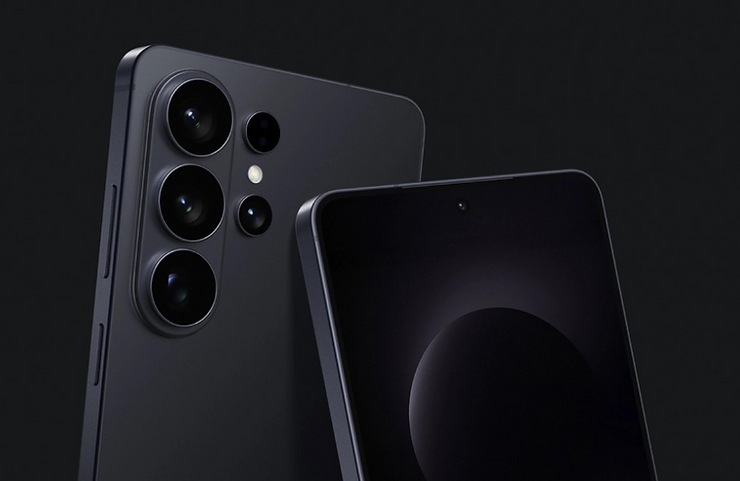
The Samsung Galaxy S26 Ultra hasn’t seen many exterior changes. It’s slightly thinner (7.2 mm) and lighter (214 grams) than its predecessor, with an aluminum frame replacing the titanium one and a Gorilla Glass Victus 2 back panel.
Main characteristics
The front features a 6.9-inch LTPO AMOLED display with QHD+ resolution and an adaptive refresh rate of 1–120Hz. It boasts a peak local brightness of up to 2600 nits, like the S25 Ultra, and is protected by Corning Gorilla Armor 2 technology. Samsung isn’t abandoning the stylus, so the S Pen will remain available for another year, but it still doesn’t support Bluetooth. The display’s anti-glare coating, ultrasonic fingerprint scanner, and 12-megapixel front camera remain. The key innovation is Privacy Display. Certain areas of the screen darken when viewed from an angle. This feature is highly customizable. This is a true hardware breakthrough: Samsung has managed to darken individual pixels of the screen, so they appear black when viewed from the side. This allows you to hide notifications, pop-ups, and password entries from others, keeping your information safe. The feature can be turned on and off manually, or you can set your phone to turn on automatically when you’re on the go.
Unlike its S26 siblings, the S26 Ultra is powered by a Qualcomm Snapdragon 8 Elite Gen 5 chip in all regions. Storage options include 12GB/256GB, 12GB/512GB, and 16GB/1TB. There are few changes to the camera department. The main 200-megapixel sensor has a wider f/1.4 aperture for better light capture in low-light conditions. Samsung claims the updated main sensor can capture 47% more light. There’s also a 10-megapixel 3x telephoto lens, a 50-megapixel periscope lens with 5x zoom, and a 50-megapixel ultra-wide-angle lens. The S26 Ultra retains the same 5,000mAh battery. However, charging is faster this time around. The S26 Ultra is capable of 60W wired charging. This should be enough to charge the battery from 0 to 75% in 30 minutes.
About the Author